PARKS Atlas
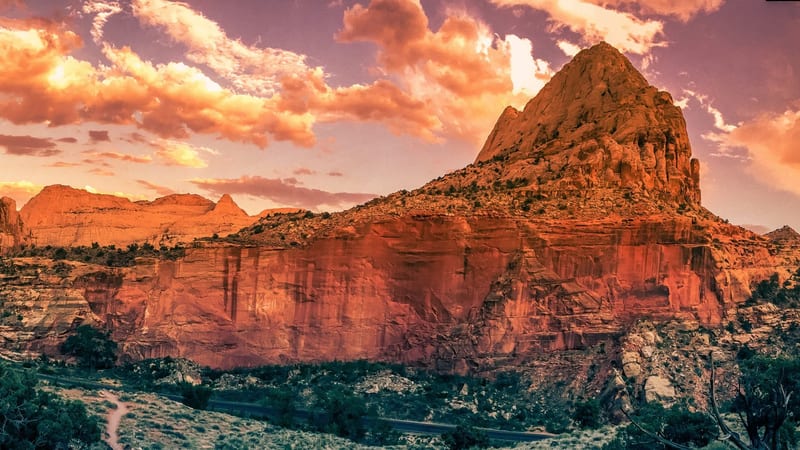
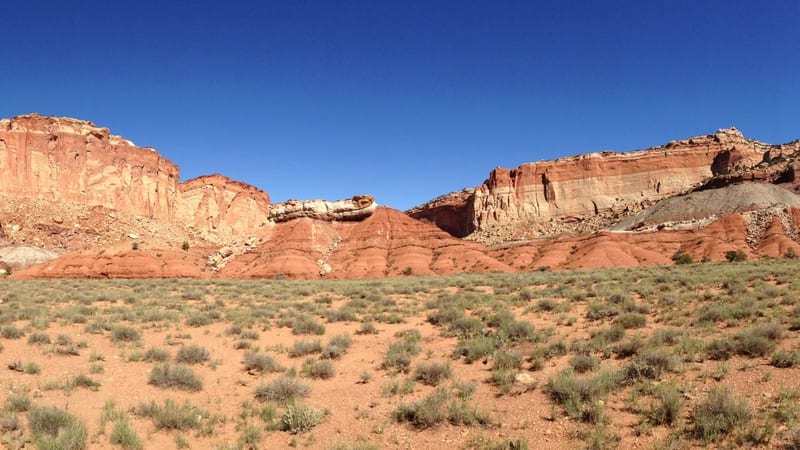
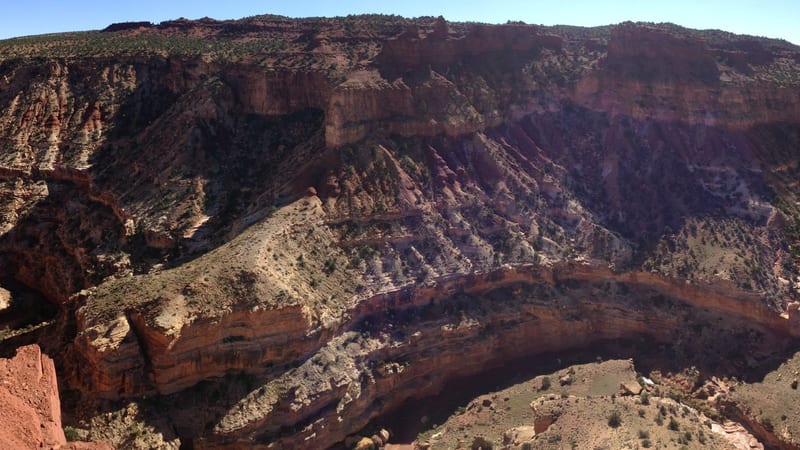
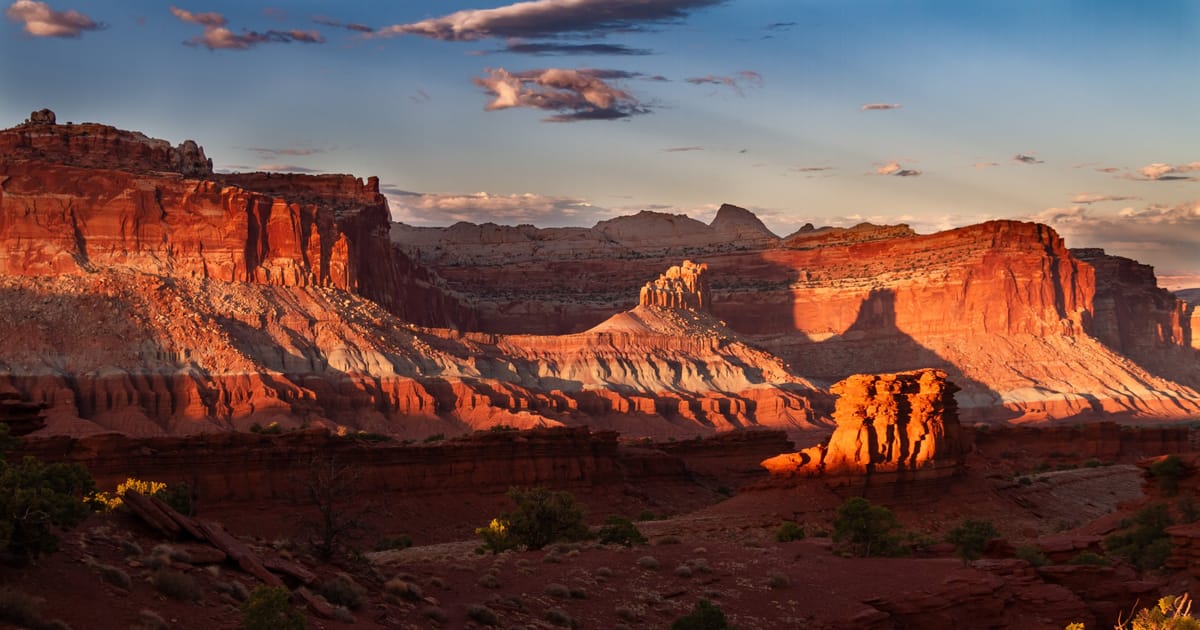
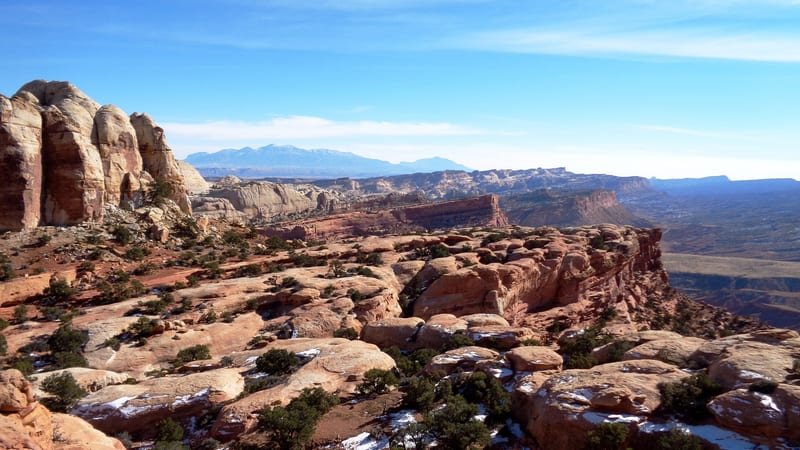
A sweeping panorama of red sandstone mesas and layered canyon walls bathed in warm golden-hour light, likely Capitol Reef National Park in Utah, with dramatic shadows and glowing orange cliffs set against a blue sky with scattered clouds.

Utah · National Park

Capitol Reef

The quietest of Utah’s Mighty 5 — a 100-mile fold in the rock, a pioneer fruit orchard, and red-rock backcountry most visitors drive right past.

A sweeping panorama of red sandstone mesas and layered canyon · Capitol Reef National Park

Overview

About Capitol Reef

Capitol Reef protects the Waterpocket Fold — a 100-mile wrinkle in the Earth's crust where the rock layers tilt and buckle into cliffs, domes, and slot canyons — with the green pioneer orchards of Fruita tucked along the Fremont River at its heart. It is the quietest of Utah's Mighty 5: no timed-entry, no shuttle, no permit lottery. The decisive split here is paved versus dirt. The Scenic Drive, the Fruita orchards, and the Hickman Bridge walk are easy and open to any car; the headline backcountry — Cathedral Valley, the Waterpocket Fold roads, the southern slot canyons — sits at the end of long unpaved roads that flash-flood and need clearance or 4WD. Sort yourself onto the right side of that line and the park opens up.

Designation
National Park
State
Utah
Entry fee
$20 / vehicle (7 days, 2026)
Fee scope
Scenic Drive only — UT-24 & Fruita are free

Map

Explore Capitol Reef

Explore more

Headline Hikes

Top trails in Capitol Reef

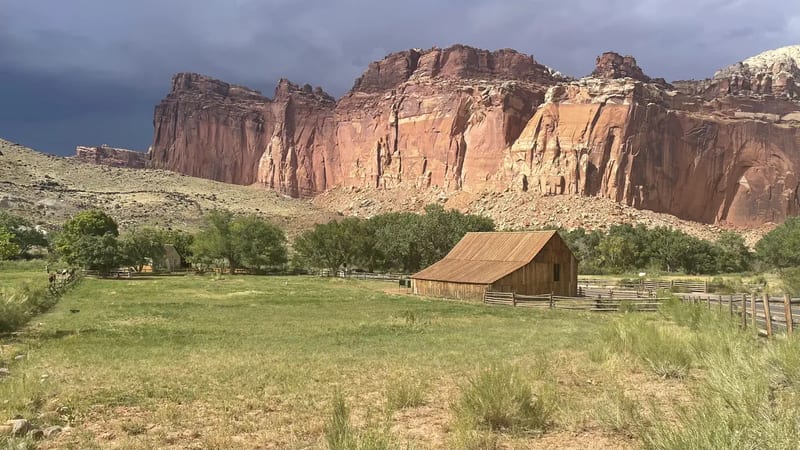
  1. A historic pioneer farmstead with a rustic wooden barn and fenced pastures sits beneath towering red sandstone cliffs in Capitol Reef National Park, Utah.

    Cassidy Arch

    4.8 (6,838)

    3.3 mi +662 ft gain 1.5–2.5 hr

    Moderate Out & back

    Named for Butch Cassidy, who allegedly hid in the canyons below. Steep switchbacks out of Grand Wash lead to a slickrock ridge where you walk on top of the arch itself — a 50-foot span over a 400-foot drop. Not for the height-averse, but the view down Grand Wash is the reward.
  2. A historic pioneer farmstead with a rustic wooden barn and fenced pastures sits beneath towering red sandstone cliffs in Capitol Reef National Park, Utah.

    Chimney Rock Loop

    4.8 (3,204)

    3.6 mi +797 ft gain 1.5–2.5 hr

    Moderate Loop

    A loop that climbs from the highway to a ridge above the Chimney Rock spire, then traverses the mesa top with views across the Waterpocket Fold. The climb is steady but never technical. Go early — the south-facing slope bakes by midmorning and there is zero shade on top.

  3. A historic pioneer farmstead with a rustic wooden barn and fenced pastures sits beneath towering red sandstone cliffs in Capitol Reef National Park, Utah.

    Navajo Knobs

    4.8 (1,654)

    9.2 mi +2,145 ft gain 4–6 hr

    Strenuous Out & back

    The longest and most exposed trail in the Fruita area — follows the Rim Overlook route past its terminus and continues along the slickrock rim to a 360-degree viewpoint above Halls Creek. The final mile is cairn-following across bare rock. Carry more water than you think you need; there is no shade and no bailout.

  4. Sulphur Creek

    6.1 mi 482 ft gain

    Moderate Point to point

    Sulphur Creek is a river-canyon route, not a maintained trail, so you wade the creek and scramble down a few small waterfalls and pour-offs along the way (expect wet feet, and bring a swimsuit). Most people hike it one-way, top-down, which means it is point-to-point and needs a short car shuttle between the two trailheads. The park moved the official start to a pullout 0.25 miles west on the south side of Highway 24. This is a narrow canyon and it is flash-flood prone, so never enter if rain is in the forecast.

  5. A historic pioneer farmstead with a rustic wooden barn and fenced pastures sits beneath towering red sandstone cliffs in Capitol Reef National Park, Utah.

    Hickman Bridge

    4.7 (10,563)

    1.8 mi +416 ft gain 1–1.5 hr

    Moderate Out & back

    The park's signature trail — a short climb through Kayenta sandstone to a 133-foot natural bridge spanning a side canyon. The trail also passes a small Fremont granary tucked into a cliff alcove. Best in morning light when the bridge glows orange against blue sky.

  6. A historic pioneer farmstead with a rustic wooden barn and fenced pastures sits beneath towering red sandstone cliffs in Capitol Reef National Park, Utah.

    Grand Wash

    4.7 (5,280)

    4.8 mi +341 ft gain 2–3 hr

    Easy Out & back

    A flat walk through a narrow canyon where Wingate sandstone walls close to 16 feet apart. The narrows section is the draw — Capitol Reef's answer to Zion's slot canyons, without the permit or the crowds. Flash flood risk is real; check weather before entering.

Trail descriptions are field-tested summaries; verify current conditions and closures with NPS before hiking.

See all trails

Where to Base

Where to base near Capitol Reef

Where you stay decides which part of Capitol Reef is easiest to reach each morning. Compare the main base towns and pick the one that fits your trip.

  • Full-service basecamp town

    Torrey

    Distance to entrance
    8.6 mi drive
    Property mix
    Small inn / motel mix
    Town → park shuttle
    No — drive in
    Explore Torrey
  • Scenic Byway 12 alternate

    Escalante

    Distance to entrance
    40.4 mi drive
    Property mix
    Small inn / motel mix
    Town → park shuttle
    No — drive in
    Explore Escalante
See all gateway towns

Multi-day routes

The signature routes of Capitol Reef

The multi-day and big-commitment routes that take real planning — sequenced stop by stop, with the logistics and the bail plan answered before you go.

Camping

Camping in Capitol Reef

  • Capitol Reef Group Campground

    In-park · Group Camp

    Capitol Reef Group Campground

    Reservation $125/night 1 sites

    The park's only group site, in the Fruita orchards by the Fremont River — reserve ahead; the in-park campground is otherwise small.

    • Flush Toilets
    • Water
    • Dump Station

    Data Source: Recreation.gov

    Campground Details
    Reserve on Recreation.gov

    You'll be redirected to Recreation.gov

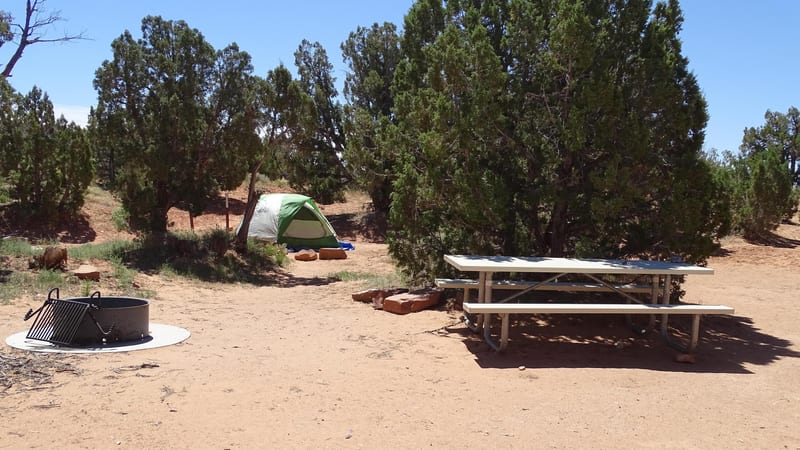
  • Fruita Campground

    In-park · Frontcountry

    Fruita Campground

    Reservation $25/night 71 sites

    A lush oasis among the historic Fruita orchards by the river — open year-round and booked solid March through October, so reserve six months out.

    • Flush Toilets
    • Water
    • Dump Station

    Data Source: Recreation.gov

    Campground Details
    Reserve on Recreation.gov

    You'll be redirected to Recreation.gov

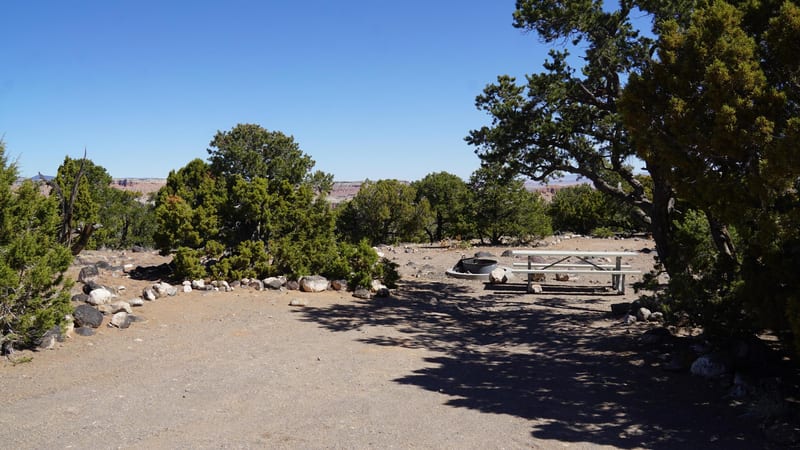
  • Primitive campsites at Cathedral Campground

    In-park · Backcountry

    Primitive campsites at Cathedral Campground

    First-come, first-served 6 sites

    Six remote sites at 7,000 feet in Cathedral Valley, 36 miles out — free and first-come, but plan on high-clearance 4WD and bring all your water.

    • Vault Toilets
  • Primitive campsites at Cedar Mesa Campground

    In-park · Backcountry

    Primitive campsites at Cedar Mesa Campground

    First-come, first-served 5 sites

    Five quiet sites down Notom-Bullfrog Road (usually 2WD), free and first-come — a pit toilet, no water, and the Red Canyon trail next door.

    • Vault Toilets

Campground listings sourced from the Recreation Information Database (RIDB). Recreation.gov is the only authorized booking site — confirm fees, dates, and site counts there before reserving.

See all campgrounds

Getting There

Getting to Capitol Reef

Drive approaches

  • Salt Lake City, UT (SLC) 3h 30m

    via I-15 S + US-50 / UT-260 + UT-24

    The nearest major airport; the northern approach down through central Utah.

  • Bryce Canyon, UT 2h 15m

    via Scenic Byway 12 over Boulder Mountain + UT-24

    The western Mighty 5 leg — one of the most scenic drives in the country.

  • Moab, UT (Arches / Canyonlands) 2h 15m

    via I-70 W + UT-24 S

    The eastern Mighty 5 leg, in from Arches and Canyonlands.

  • Las Vegas, NV (LAS) 5h 30m

    via I-15 N + UT-20 + US-89 + UT-12 + UT-24

    Common fly-in for a full Utah loop; pairs Capitol Reef with Bryce and Zion.

Entrance stations

  • UT-24 Through-Route + Scenic Drive Fee Station

    There is no entrance gate on UT-24 — the highway runs straight through the park, free, past the visitor center, the Castle, and the Fruita orchards. The fee is collected only on the paved Scenic Drive, at a self-pay station past Fruita. Bring small bills or a card; there is no staffed booth.

    Best for The Scenic Drive, Capitol Gorge, and Grand Wash

  • Remote Districts — Burr Trail & Cathedral Valley

    The park's backcountry runs far north into Cathedral Valley and south along the Waterpocket Fold and the Burr Trail switchbacks. These are dirt-road districts — the Cathedral Valley loop begins with a ford across the Fremont River — not the paved core most visitors see.

    Access High-clearance, often 4WD; roads turn impassable when wet — check conditions at the visitor center first

    Best for A full self-sufficient day off pavement, far from the Fruita crowds

The unpaved backcountry roads — Cathedral Valley, the Notom–Bullfrog Road — and the canyon hikes are weather-gated. Summer monsoon storms (roughly July–September) bring flash floods and turn the dirt to impassable mud. Check road and wash conditions at the visitor center before any backcountry drive or canyon hike.

Sightseeing

Viewpoints in Capitol Reef

  • Capitol Gorge

    Trailside

    Capitol Gorge

    Long walk

    Flat walk through a narrow canyon past pioneer signatures and the Pioneer Register.

    Best at midday

  • Capitol Reef Scenic Drive

    Roadside Pullout

    Capitol Reef Scenic Drive

    Roadside

    The paved scenic drive running about 8 miles south from the visitor center along the Waterpocket Fold, past the Fruita orchards and the Gifford Homestead toward the mouths of Grand Wash and Capitol Gorge. Pullouts and short gravel spurs give close looks at the Wingate and Navajo sandstone cliffs. A small per-vehicle fee applies past the orchards; the spur roads are usually fine for most cars when dry but flood in storms.

    Good all day

  • Hickman Bridge

    Arch

    Hickman Bridge

    Long walk

    Large natural bridge reached by a 1.8-mile round-trip trail off Highway 24.

    Best at midday

  • Panorama Point

    Overlook

    Panorama Point

    Roadside

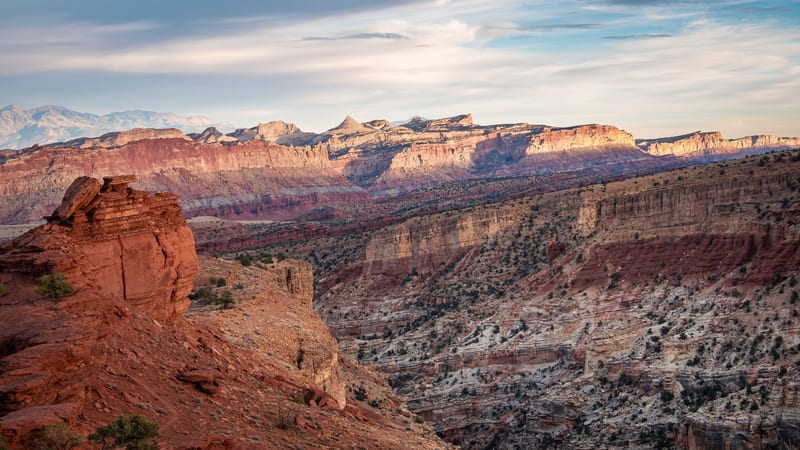
    Roadside viewpoint over the Waterpocket Fold and distant Henry Mountains.

    Best at sunset

  • Sunset Point

    Overlook

    Sunset Point

    Short walk

    Easy 0.4-mile walk to a viewpoint of the cliffs glowing at day's end.

    Best at sunset

  • Temple of the Sun and Moon

    Overlook

    Temple of the Sun and Moon

    Roadside

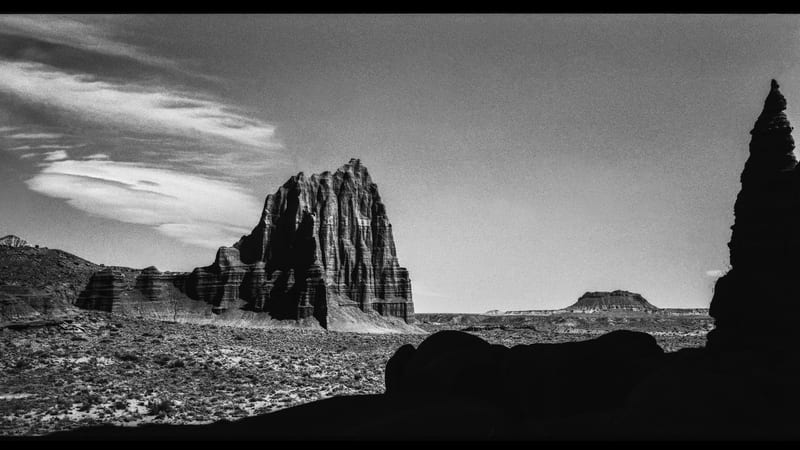
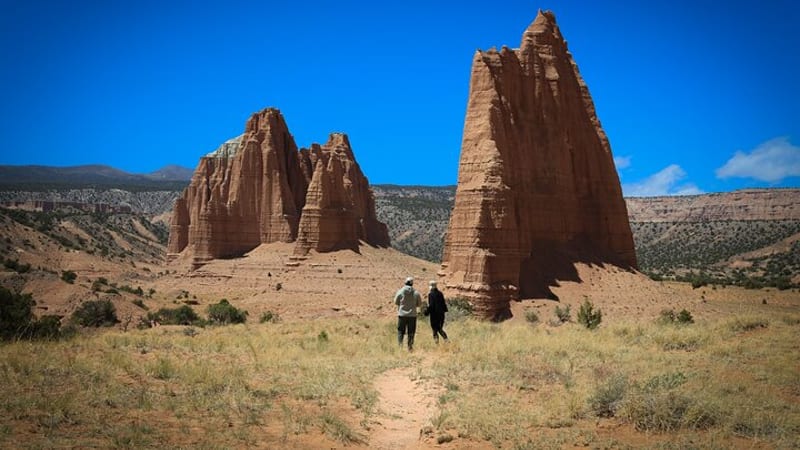
    Two free-standing sandstone monoliths rising from the floor of Cathedral Valley in Capitol Reef's remote northern district. Reaching them means the Cathedral Valley Loop — a roughly 57-mile high-clearance dirt road that fords the Fremont River and turns impassable when wet, so check conditions and carry a spare. The monoliths take warm light at sunrise and sunset, which is why photographers make the long drive.

    Best at sunrise

See all viewpoints

When to Go

The best time to visit Capitol Reef

Best Time to Visit

Capitol Reef

Spring & fall. Fruit harvest runs through summer and early fall; flash floods are a risk during summer storms.

  • April
  • May
  • September
  • October
Spring
64° / 32°F
Summer
88° / 58°F
Fall
71° / 41°F
Winter
41° / 16°F
See the full seasonal guide

Plan Your Trip

Tips for visiting Capitol Reef

Best times to visit

  • Sweet spot

    April – May, September – October

    Mild days, cool nights, the orchards in blossom or fruit, and the dirt roads at their most reliable.

  • Fruit harvest

    June – October

    Cherries and apricots in early summer through apples in fall — pick-your-own in the Fruita orchards during posted windows. The orchard harvest calendar shifts year to year; check the current pick-your-own schedule at the visitor center.

  • Watch out

    July – August

    Heat on the exposed trails and monsoon flash floods that close the canyons and dirt roads — hike early and watch the sky.

What to pack

  • 2+ liters of water per person The canyon and ridge trails are exposed with little shade; the desert pulls water out of you faster than the temperature suggests.
  • Sun hat + high-SPF sunscreen Open red rock reflects the sun — the burn risk is real even on a mild day.
  • A warm layer for the evening High-desert nights drop sharply after sunset, even in summer.
  • A full tank + offline maps for the backcountry Cathedral Valley and the Notom road have no fuel, water, or cell service — leave town topped off and navigating offline.
  • Sturdy footwear with grip The slickrock approaches (Cassidy Arch) and sandy washes are no place for smooth-soled shoes.

Permits & reservations

Capitol Reef has no timed-entry reservation and no day-use permit — you can simply drive in. Backcountry and canyoneering trips are free self-registration at the visitor center; anyone selling Capitol Reef entry reservations elsewhere is a scam.

What to Pack

Gear for Capitol Reef

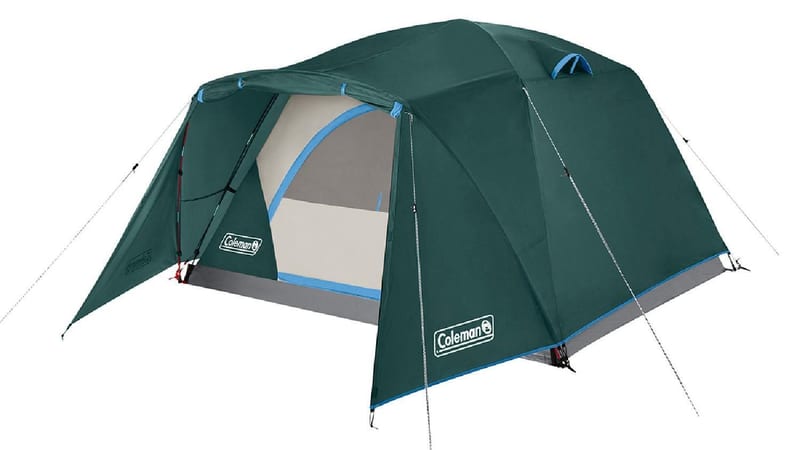
  • 6-Person Camping Tent

    Sleeping

    6-Person Camping Tent

    $161–$219

    Spend less time pitching your tent and more time relaxing at the campsite. This Coleman Skydome 4-person tent offers extra weather protection and has a full-fly vestibule for added storage space.

    Why it matters Sleeps the whole group with room to stand; the baseline shelter for a campground site.

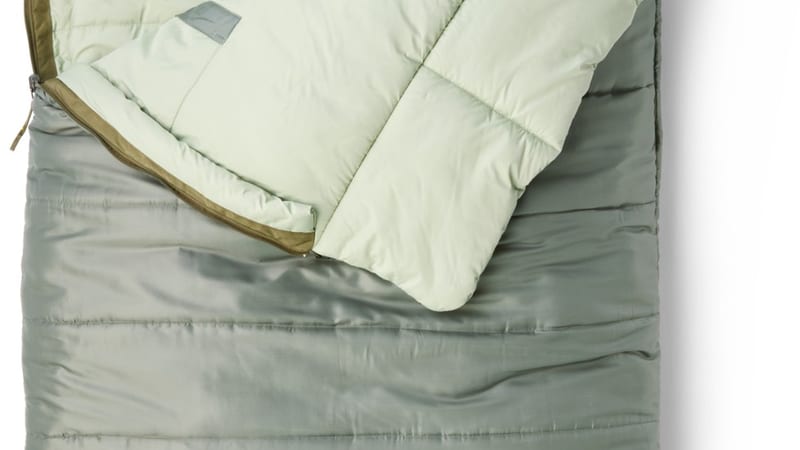
  • Car-Camping Sleeping Bag

    Sleeping

    Car-Camping Sleeping Bag

    $126–$172

    Stay toasty warm on cool-weather car-camping nights with the REI Co-op Siesta Hooded 20 synthetic sleeping bag. Its classic rectangular shape gives you plenty of room to stretch and turn.

    Why it matters A roomy, warm bag rated for cool park nights so you actually sleep.

  • Self-Inflating Camp Pad

    Sleeping

    Self-Inflating Camp Pad

    $169–$229

    A self-inflating camp mattress that's plush enough to sleep on at home, the REI Co-op Camp Dreamer XL puts 4 in. of air and engineered foam between you and the cold, hard ground.

    Why it matters Insulation and cushion between you and cold ground — the difference between rest and a long night.

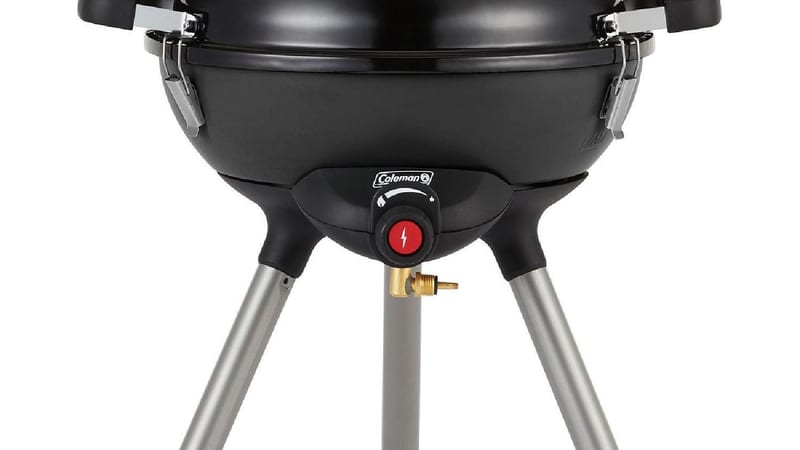
  • Two-Burner Camp Stove

    Cooking

    Two-Burner Camp Stove

    $140–$190

    Cook up a variety of outdoor meals when you travel with this Coleman camping stove. 3 interchangeable cooktops make it easy to prepare any meal on this portable, space-saving stove.

    Why it matters Cook real meals at camp; two burners handle coffee and breakfast at once.

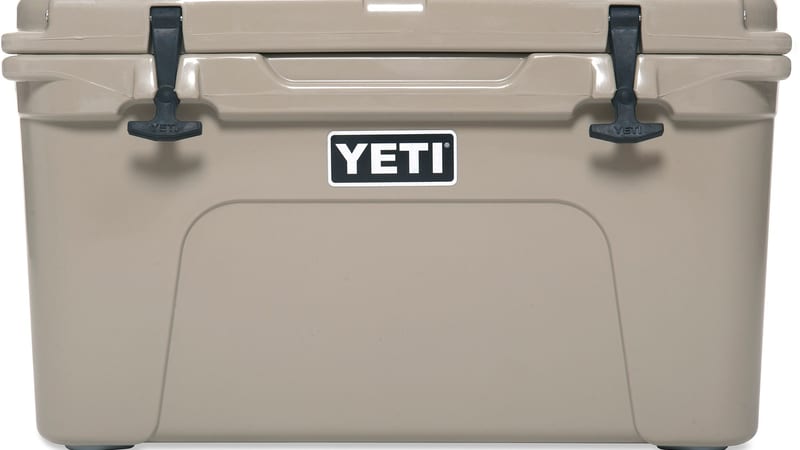
  • Hard Cooler

    Cooking

    Hard Cooler

    $276–$374

    Be ready for camping adventures, family picnics and days on the water. This durable YETI cooler provides 32.9 liters of storage. Extra-thick walls with insulation keep your food and drinks ice cold.

    Why it matters Keeps food cold for days so you skip the daily grocery run from a remote park.

  • Rechargeable Camp Lantern

    Electronics

    Rechargeable Camp Lantern

    $29–$41

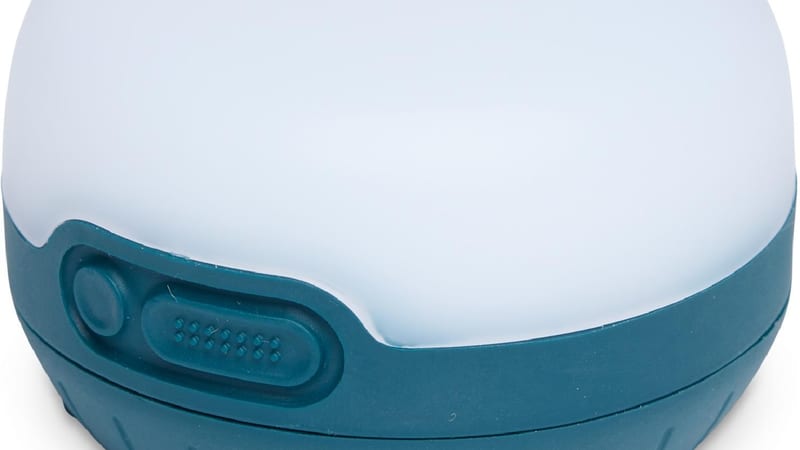
    Built to go anywhere you do—from family camping trips to big-wall adventures—the Black Diamond Moji + lantern boasts 200 lumens of adjustable light and Dual Fuel technology for ultimate versatility.

    Why it matters Hands-free light for the campsite after dark — most parks have no site lighting.

Prices and stock change often — confirm the current price with the retailer before buying.

Road Trip

Doing all five Utah parks?

One loop strings Zion, Bryce Canyon, Capitol Reef, Arches, and Canyonlands onto a single drive. The route page lays out the stop order, the drive times, and what each park is for.

Road Trip

The Mighty 5

Parks
5
Distance
1177 mi
Trip length
7–9 days

Five national parks on one red-rock loop — about 1,180 miles and 22 hours of driving from Las Vegas, best over 9 days.

  • Zion
  • Bryce Canyon
  • Capitol Reef
  • Arches
  • Canyonlands
Utah's Mighty 5 Field-Tested Guide — 2026 edition digital guide cover with Delicate Arch at sunset

Save on Entry

One pass covers Capitol Reef — and every other US national park.

The America the Beautiful annual pass pays for itself in two or three park visits. Free entry, free passenger fees, and no more fumbling for a credit card at the kiosk.

America the Beautiful National Park Pass — the 2026 annual pass card Buy your pass → Learn more about the pass

Ships from US Park Pass. Free shipping in the continental US.