Summer — the wildflowers and the high country
Peak crowds Jul–Aug
The narrow window the whole trip aims at. The Paradise meadows shed the last of their snow through July and reach their peak wildflower display around August 1 — lupine, paintbrush, and avalanche lily across the subalpine meadows. Sunrise opens in early July most years (closed for the 2026 winter as of late June). Days are mild (50s–60s at Paradise) and the longer trails — the Wonderland Trail loop, Skyline, Burroughs Mountain — are finally clear of snow. Reserve a Paradise Inn or Cougar Rock campsite months ahead. The Carbon River Road has been closed to cars since 2006 (foot and bike only), and the Mowich Lake Road is currently cut off by the SR-165 Fairfax Bridge closure outside the park, so there's no public road access to that northwest corner for now.
What's open: Paradise, Stevens Canyon, Ricksecker Point, and Westside Road open; Sunrise Road typically opens early July (was still closed in late June 2026 — verify on nps.gov/mora); subalpine wildflowers peak by August 1 most years; Carbon River Road closed to cars since 2006 (foot/bike only) and Mowich Lake Road cut off by the SR-165 Fairfax Bridge closure (no SR-165 access); no timed-entry reservation required in 2026.
Book a Paradise-area stay →
Early fall — clearing crowds, color in the meadows
Moderate crowds Sep–Oct
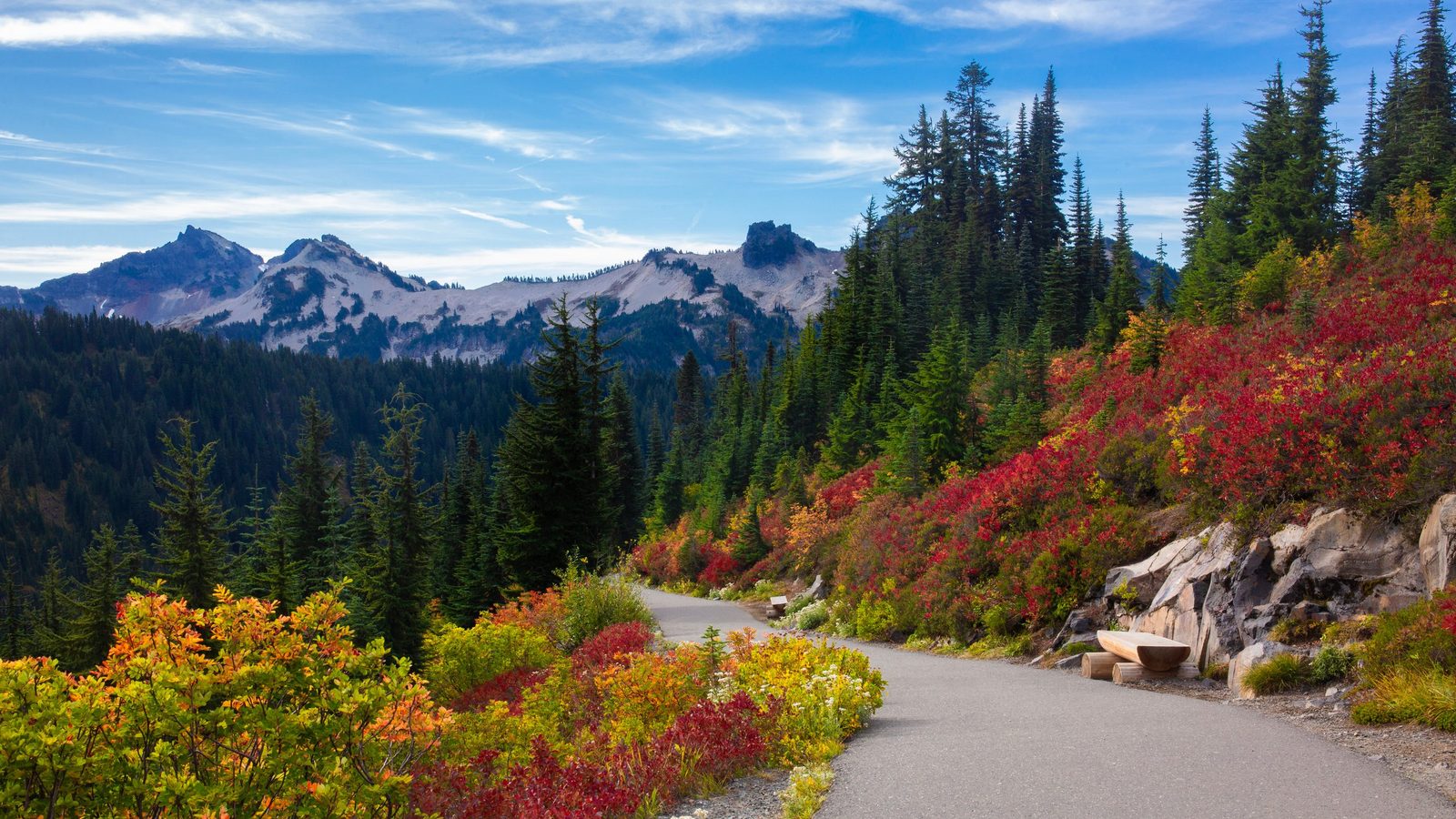
Crowds drop sharply after Labor Day and the subalpine meadows turn red and gold through late September — huckleberry, mountain ash, and dwarf bilberry color the same slopes the wildflowers held in August. Days cool quickly: Paradise highs slip from the 60s into the 40s by mid-October, and the first heavy snow can close Sunrise and the Stevens Canyon corridor by late October most years. The first part of the window is one of the best stretches of the year to be on the mountain.
What's open: Paradise and Stevens Canyon corridor typically open through September; Sunrise Road closes by mid-to-late October most years; tire chains required park-wide November 1 to May 1; trail snow possible above 5,000 feet from late September on.
Check road and pass conditions →
Winter — snowshoe country to Paradise
Light crowds Jan–Mar · Nov–Dec
The mountain shifts into a winter park. The road to Paradise stays plowed as conditions allow, and snowshoeing and cross-country skiing replace the summer trails — ranger-led snowshoe walks run weekends out of the Jackson Visitor Center most winters. Tire chains are required park-wide November 1 to May 1, and the road can close at the Longmire gate for storms with little warning. Stevens Canyon Road, Sunrise, and most other roads are closed for the season.
What's open: Road to Paradise open when conditions allow (chains required Nov 1 to May 1 regardless of drive); Stevens Canyon Road and Sunrise Road closed for the season; Carbon River Road closed to cars (since 2006) and Mowich Lake Road cut off by the SR-165 Fairfax Bridge closure; ranger-led snowshoe walks weekends most winters.
Check the Paradise road and chain status →
Late spring — Paradise opens, snow still deep
Moderate crowds Apr–Jun
The transition month and a half. The road to Paradise is reliably open, but the meadows are still under feet of snow well into June — the trip is for sliding on a leftover snowfield and seeing the Tatoosh Range across white slopes, not for wildflower hikes. Stevens Canyon Road and Sunrise Road usually open between mid-May and early July, year by year. Tire chains are required until May 1. Crowds are still light, and the Nisqually entrance line stays manageable on weekdays.
What's open: Road to Paradise open; Stevens Canyon Road typically opens mid-to-late May; Sunrise Road typically opens late June to early July; tire chains required park-wide through May 1; meadow trails buried in snow into July.
Check the road opening schedule →